Inspiration
What Is Specialty Coffee?
Discover what specialty coffee is, how it’s made, and why its refined flavor and balanced acidity create a better daily coffee ritual.

Written by Who Is Coffee Team
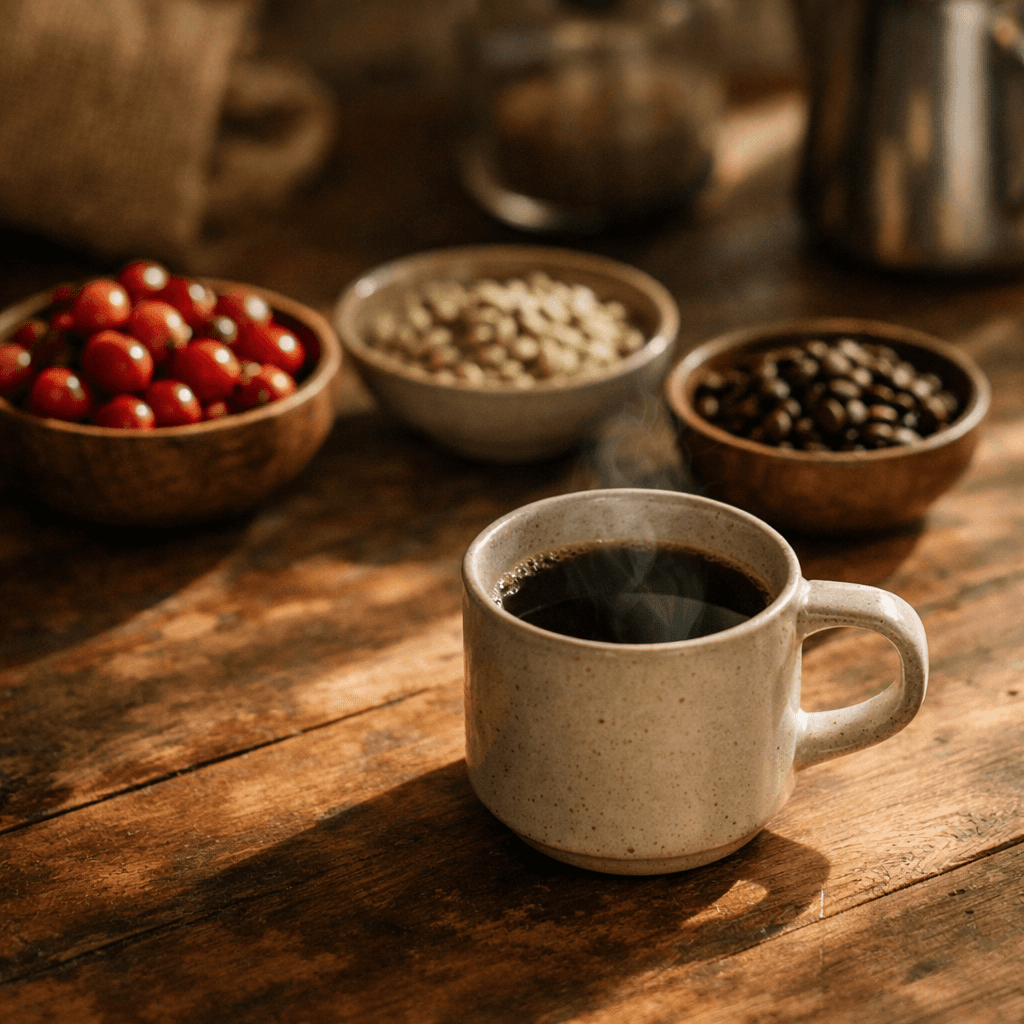
What Is Specialty Coffee? A Better Cup Starts Here
Coffee is one of the most shared rituals in the world.
It starts mornings, anchors conversations, fuels creativity, and gives us a reason to pause — even if only for a few minutes. Yet for something so deeply woven into our daily lives, most of us were never taught what coffee actually is, where it comes from, or why some cups feel smooth and satisfying while others taste harsh or leave our stomachs uneasy.
That’s where specialty coffee comes in.
This article is your introduction to specialty coffee: what it is, where it comes from, how it’s made, why it tastes better, and what you should expect when you start drinking it. Think of this as the foundation — the context that makes everything else about coffee finally click.
Coffee, at Its Roots
Coffee doesn’t begin in a bag, a pod, or a café.
It begins as a fruit.
Coffee grows on trees in regions around the equator known as the Coffee Belt, which includes parts of Central and South America, Africa, and Asia. Countries like Ethiopia, Colombia, Guatemala, Kenya, and Indonesia are just a few of the places where coffee thrives.
Each coffee tree produces cherries, and inside each cherry are usually two seeds — what we eventually roast, grind, and brew.
Where coffee is grown matters because:
Climate affects sweetness and acidity
Soil influences flavor and complexity
Elevation impacts density and clarity
Farming practices shape quality and sustainability
Coffee is agricultural. It’s seasonal. And like wine or fresh produce, its quality is inseparable from its origin.
From Tree to Cup (The Short Version)
We’ll explore this journey in detail later, but here’s the high-level path every coffee takes:
Harvesting - Coffee cherries are picked, often by hand when quality matters most, to ensure only ripe fruit is selected.
Processing - The fruit is removed from the seed using specific methods that shape flavor and acidity.
Drying & Milling - The beans are dried, sorted, and prepared for export.
Roasting - Heat transforms raw green coffee into aromatic, flavorful beans.
Brewing - Water meets coffee — and your daily ritual begins.
Specialty coffee is defined by how much care is given at every one of these steps.
What Makes Coffee “Specialty”?
Specialty coffee is coffee that has been grown, processed, roasted, and evaluated with exceptional care — and verified for quality along the way.
From an industry standpoint, specialty coffee must score 80 points or higher (out of 100) on a standardized quality scale used by trained coffee tasters. But from a drinker’s perspective, it means something simpler:
Specialty coffee tastes clean, balanced, and expressive — not bitter, sour, or burnt.
Compared to commodity coffee, specialty coffee is:
Traceable to specific regions, farms, or producers
Grown in conditions that support flavor development
Carefully processed to avoid defects
Roasted to highlight natural characteristics, not hide flaws
Evaluated multiple times before it ever reaches your cup
In short, specialty coffee treats quality as the goal — not volume or uniformity.
A Note on Acidity (And Why Specialty Coffee Feels Better)
One of the most misunderstood aspects of coffee is acidity.
When people say coffee is “too acidic,” they’re usually describing something harsh, sour, or uncomfortable — not the bright, pleasant acidity coffee professionals value.
Here’s the key distinction:
Specialty coffee doesn’t necessarily have less acid.
It has better, more refined acidity.
The Difference Between “Harsh” and “Refined” Acidity
Coffee contains many different acids, and not all of them taste or feel the same.
Refined acidity (common in specialty coffee) tastes bright, crisp, and balanced — often described as citrusy, apple-like, or lively.
Harsh acidity (common in commodity coffee) can taste sour, bitter, or vinegary and is often associated with stomach discomfort.
What creates that difference?
Why Specialty Coffee’s Acidity Is More Balanced
High-Altitude Growing
Specialty coffee is typically grown at higher elevations, where cooler temperatures slow cherry development. This allows beans to build complex sugars and desirable organic acids that taste bright and sweet rather than sharp.
Careful Processing
Specialty producers closely control fermentation and processing to avoid defects that create sour or unpleasant acidity.
Precision Roasting
Specialty roasters use carefully designed roast profiles to preserve good acids while preventing the breakdown of compounds that lead to bitterness and irritation.
Strict Quality Control
Defective beans — a major source of harsh acidity — are identified and removed long before roasting.
The result is coffee that feels smoother, cleaner, and often easier on the stomach, even when it tastes bright and flavorful.
The Hidden Hero: Specialty Coffee Quality Control
One of the biggest reasons specialty coffee tastes better has nothing to do with marketing — and everything to do with standards.
How Specialty Coffee Is Evaluated
Before coffee earns the label “specialty,” it passes through multiple layers of quality control:
Physical inspection of green beans to identify defects
Strict defect limits, allowing:
Zero primary defects (such as sour, moldy, or black beans)
Only a handful of minor secondary defects per batch
Professional sensory evaluation, where trained tasters assess:
Aroma
Flavor
Acidity balance
Sweetness
Body
Cleanliness
Aftertaste
Even a single severely defective bean can disqualify a coffee from specialty status.
Why This Matters to You
Defective beans are one of the main causes of:
Bitter or sour flavors
Unpleasant acidity
Digestive discomfort
Inconsistent cups
Commodity coffee — produced at massive scale — does not follow these same standards, which means defective beans often make it into the final product. Dark roasting is then used to mask those flaws.
Specialty coffee removes the problem at the source.
What to Expect When You Start Drinking Specialty Coffee
If you’re new to specialty coffee, here’s what might surprise you:
It may taste cleaner and lighter than you expect: Not all good coffee is dark or bitter.
You’ll notice real differences between coffees: Origin, season, and roast suddenly matter — and you’ll taste why.
You may need less cream or sugar: When coffee is balanced, it doesn’t need fixing.
Your preferences will evolve: Like food or wine, taste develops with experience — and that’s part of the joy.
Most importantly, specialty coffee invites you to slow down just enough to notice.
Why This Matters More Than You Think
Coffee is something many of us consume every day — often without thinking about it.
But daily rituals quietly shape our lives.
Choosing better coffee isn’t about being fancy or particular. It’s about turning a routine into a moment you actually enjoy. A small, repeatable act of care that sets the tone for your day.
Specialty coffee doesn’t just offer better flavor.
It offers a better relationship with something you already love.
And that’s where great days begin.
In future articles, we’ll dive deeper into:
Coffee origins and flavor profiles
Acidity, sweetness, and balance
Roasting styles and brewing methods
How to discover what you truly enjoy
For now, welcome.
You don’t need to know everything — just enough to take the first sip with intention.