Inspiration
Espresso: The Most Concentrated Ritual in Coffee
Espresso isn't just strong coffee — it's a brewing method, a craft, and the foundation of café culture. Learn what makes it unique and how to brew it well.

Written by Who Is Coffee Team
Twenty-five seconds. One fluid ounce. A small cup that somehow contains everything.
Espresso is not a roast level. It's not a type of coffee bean. And despite what the name might suggest, it's not just "really strong coffee" — though that description is understandable.
Espresso is a brewing method — one that uses pressure, precision, and speed to produce a concentrated extraction unlike anything else in the coffee world. And once you understand what it actually is, it becomes one of the most fascinating things in the cup.
What Espresso Actually Is
Espresso is made by forcing hot water — at around 9 bars of pressure — through a tightly packed bed of very finely ground coffee. The entire process takes 25 to 30 seconds.
That combination of pressure, fine grind, and speed creates something a drip or pour-over method simply cannot replicate: concentration.
A single shot of espresso (about 1–1.5 oz) contains roughly the same total dissolved solids as an entire cup of drip coffee — packed into a fraction of the volume. The flavor is dense, layered, and intense. The body is heavy, almost syrupy. And on top, if everything was done right, sits a thin layer of reddish-brown foam called crema — a sign of fresh, well-extracted coffee.
How an Espresso Machine Works
At its core, an espresso machine is a system for creating consistent pressure and temperature.
You load finely ground coffee into a portafilter — a small basket with a handle — and use a tamper to press it into an even, firm puck. The portafilter locks into the machine, and pressurized hot water (around 200°F) is forced through the puck from above.
The tight grind and compressed puck act as resistance — and it's that resistance, met with pressure, that creates espresso's signature character.
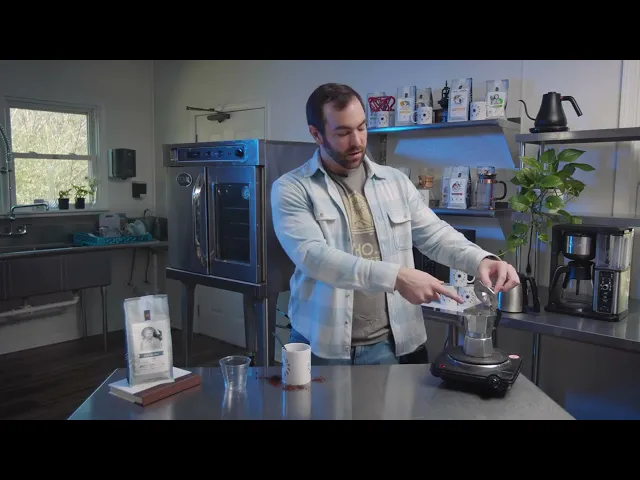
Watch our full demonstration below, including how to dial in grind size and extraction time for a balanced shot.
What Espresso Tastes Like
A well-pulled espresso is one of coffee's great pleasures — dense, complex, and alive.
Sweetness and bitterness exist together in a way that somehow works. You might taste dark chocolate, caramel, ripe fruit, toasted nuts, or bright citrus — depending on the coffee, the roast, and the extraction. A thin, persistent crema carries aroma above the liquid, making the first sip a full sensory experience.
What to expect in the cup:
Intensity: Concentrated, layered, powerful in a small volume
Body: Heavy, almost syrupy
Crema: Present when fresh and well-extracted
Flavor: Complex balance of sweetness, bitterness, and acidity — the full character of the coffee in miniature
Espresso can be made with any roast level — though medium to dark roasts are most commonly used, as their caramelized sugars and lower acidity hold up well under pressure. Specialty roasters increasingly offer light roast espresso too, with striking results: brighter, more fruit-forward, and surprisingly nuanced.
The Foundation of So Much More
Espresso is also the base for many of the world's most popular coffee drinks:
Latte: Espresso + steamed milk — silky, balanced, approachable
Cappuccino: Espresso + milk foam — more intense, traditionally served smaller
Americano: Espresso + hot water — closer to drip in volume, but with espresso's unique character
Cortado: Espresso + a small pour of warm milk — direct and bold
Understanding espresso means understanding all of these. You're no longer ordering by name — you're building from the ground up, making deliberate choices about what ends up in your cup.
An Honest Note on the Learning Curve
Espresso has a learning curve.
Grind size, dose, tamping pressure, water temperature, and extraction time all interact. A small change in any one variable changes the cup. This is part of why espresso pulls at you — every shot tells you something.
A home espresso machine can produce extraordinary results. But it takes practice, attention, and a willingness to taste and adjust. This isn't a discouragement — it's an invitation.
The process of learning espresso is one of the most engaging things you can do in coffee. And eventually, the shots that come out just right feel like a real, earned accomplishment.
The Smallest Cup, The Deepest Ritual
There's a reason espresso culture took root in Italy and spread across the world.
A shot of espresso is a pause. A small, deliberate act in the middle of a moving day. A few seconds of intensity before the day continues.
It asks nothing of you except attention. And in return, it offers something that feels — in the best possible way — entirely disproportionate to its size.